Griffith: Hero, Villain, or Something Worse?
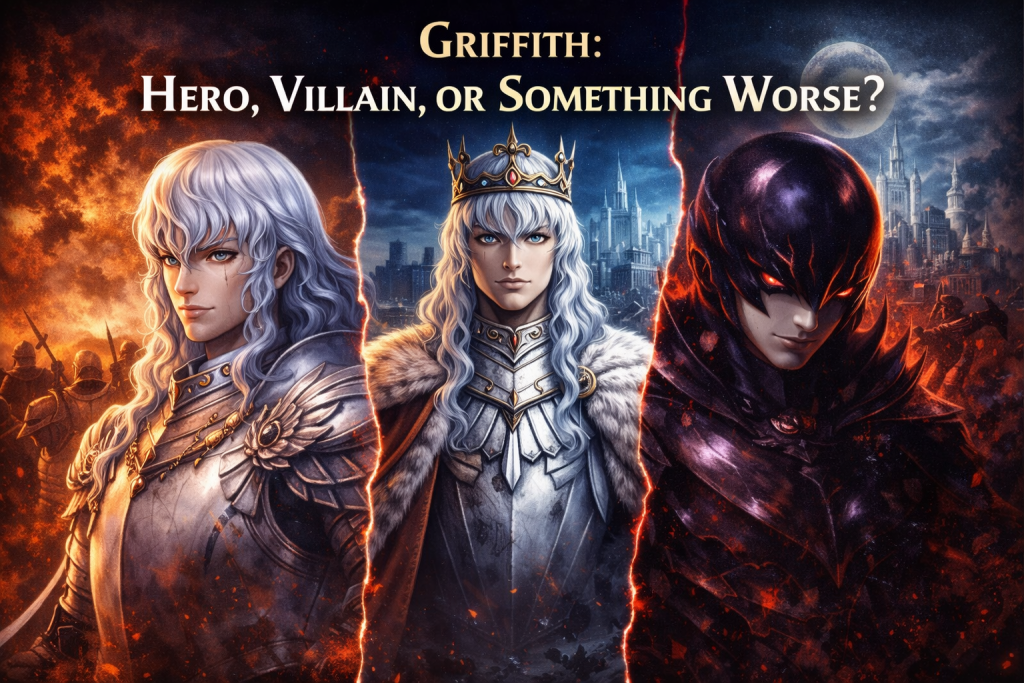
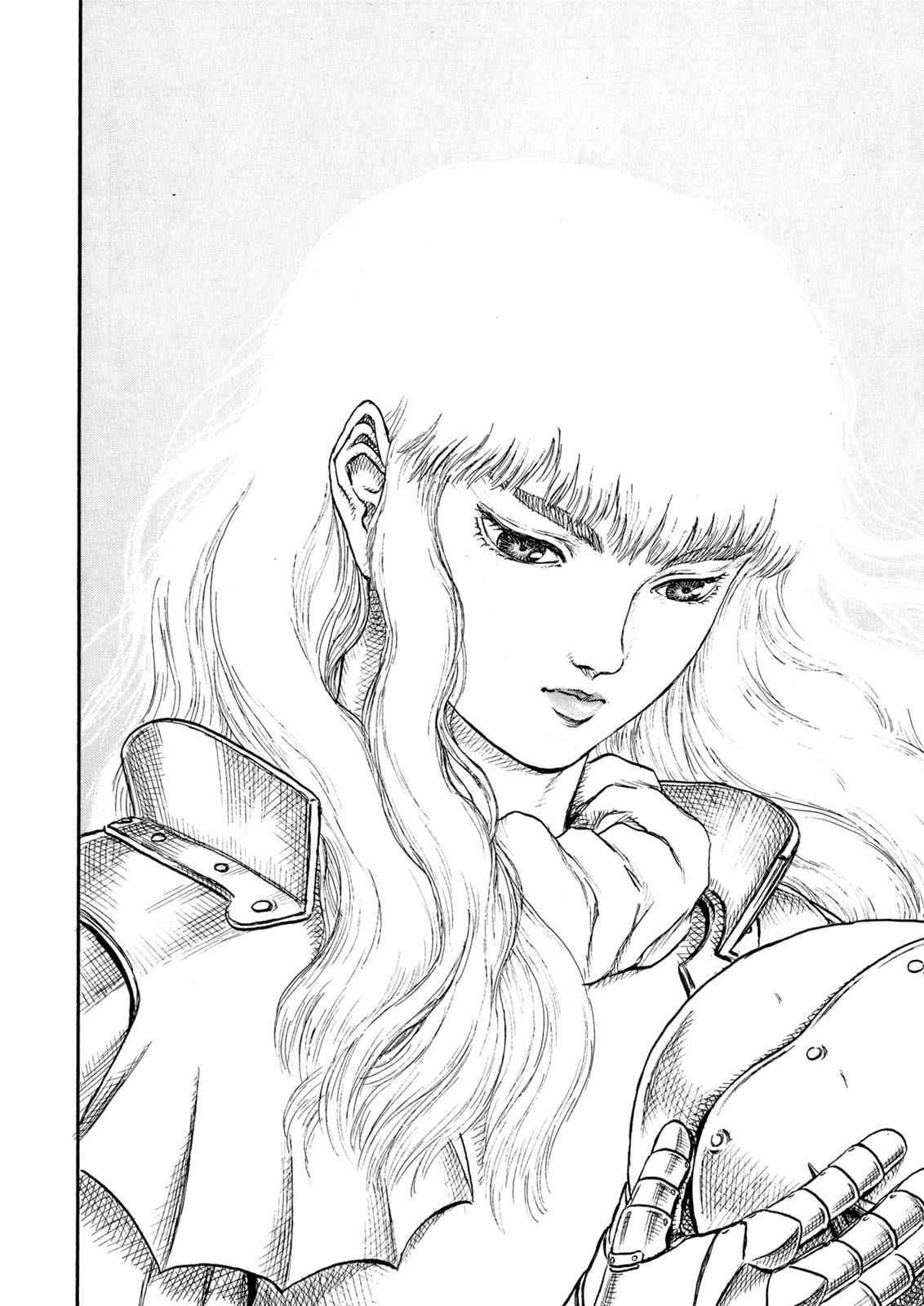


If we’re being honest…
Calling Griffith just a “villain” is too simple.
Calling him a hero feels wrong.
But saying he’s pure evil?
That also doesn’t fully capture it.
In Berserk, Griffith isn’t just an antagonist.
He’s an idea.
He’s ambition without limit.
He’s beauty hiding cruelty.
He’s destiny wrapped in charm.
Let’s really break him down — properly.
1. The Hero Everyone Believed In
During the Golden Age, Griffith is everything a medieval kingdom could dream of.
- Brilliant tactician
- Charismatic leader
- Fearless in battle
- Visionary dreamer
He takes the Band of the Hawk from nothing to nobility.
Soldiers would die for him.
Commoners admire him.
Princess Charlotte loves him.
Even Guts respects him deeply.
And here’s the truth:
Griffith genuinely saved people.
He ended wars.
He inspired loyalty.
That’s not fake.
That’s real.
Which makes what happens later even more devastating.
2. The Dream That Consumed Him
Griffith’s entire identity revolves around one thing:
His dream — to rule his own kingdom.
But here’s the dangerous part.
To Griffith, people are:
- Swords.
- Tools.
- Necessary sacrifices.
He says something early in the story that most readers overlook:
A true friend is someone who has their own dream.
That means in his mind, most people — even his soldiers — aren’t equals.
They’re stepping stones.
He cares for them… but only within the limits of his ambition.
That’s the crack in his hero image.
3. The Moment He Lost Control
When Guts leaves the Band of the Hawk, Griffith breaks emotionally.
Not because he lost a soldier.
Because he lost someone who stood as his equal.
For the first time, he felt something close to vulnerability.
And that terrified him.
His reckless decision with Princess Charlotte leads to his torture and imprisonment.
For a year, he’s physically destroyed.
His beauty gone.
His body ruined.
His dream impossible.
That’s when Griffith faces his ultimate truth:
Without his dream, he is nothing.
4. The Eclipse – The Choice That Defines Him


The Eclipse is not just a betrayal scene.
It’s a philosophical test.
The God Hand offer him a choice:
Remain broken and forgotten
Or sacrifice everything to achieve godhood
He chooses sacrifice.
He watches his loyal comrades slaughtered.
He sacrifices the Band of the Hawk without hesitation.
And then, as Femto, he commits an act that completely destroys any remaining sympathy.
That moment transforms him from tragic figure…
Into something colder.
5. Is He Pure Evil?
Here’s where it gets complicated.
After reincarnating into the physical world, Griffith creates Falconia — a safe haven for humanity.
He defeats monsters.
He protects citizens.
He builds a utopia.
From the outside?
He looks like a savior king.
People worship him.
He genuinely provides safety in a chaotic world.
So is he evil?
Or is he simply someone willing to commit ultimate sin to achieve ultimate order?
That’s what makes him terrifying.
He’s not chaotic evil.
He’s calculated.
6. Griffith vs Guts – Two Opposite Philosophies
Let’s simplify their contrast:
Griffith:
- Dream above all
- Sacrifice others for destiny
- Believes in fate and causality
Guts:
- Protect individuals
- Fight against destiny
- Refuses to sacrifice loved ones
Griffith ascends by abandoning humanity.
Guts survives by clinging to it.
That’s the core conflict.
7. Something Worse Than a Villain
Villains usually want destruction.
Griffith wants perfection.
Villains usually act from hate.
Griffith acts from ambition.
Villains usually enjoy chaos.
Griffith creates order.
And that’s what makes him worse.
Because his evil feels justified in his own logic.
He doesn’t see himself as wrong.
He sees himself as necessary.
8. The Psychological Core
The brilliance of Kentaro Miura is that he didn’t write Griffith as a cartoon antagonist.
He wrote him as:
- Narcissistic
- Traumatically ambitious
- Emotionally repressed
- Terrified of insignificance
Griffith cannot exist without his dream.
So he chooses to become something inhuman rather than live as broken.
That’s not simple evil.
That’s existential fear.
9. Why Fans Still Debate Him
Some readers hate him completely.
Some see him as a tragic fallen hero.
Some argue that the world of Berserk is so cruel that only someone like Griffith can bring stability.
And maybe that’s the real genius.
He’s not written for easy judgment.
He’s written to make you uncomfortable.
Final Answer – Hero, Villain, or Something Worse?
He began as a hero.
He became a villain.
But ultimately…
Griffith is something worse.
He’s ambition without empathy.
He’s destiny without compassion.
He’s what happens when a dream matters more than human life.
And that’s far darker than simple evil.